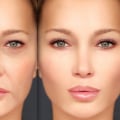
For years, the aesthetic industry has relied on a familiar formula: polished before-and-after images, curated testimonials, and carefully controlled brand messaging. It worked — until it didn’t.
Today, something far more subtle is shaping patient decisions. Not campaigns. Not slogans. Not even price.
But perspective.
Across the UK, a growing number of patients are no longer asking, “What does this clinic show?”
They’re asking, “What does this look like in real life?”
And that shift is exactly where user-generated content (UGC) has begun to quietly outperform traditional marketing, even though, organic ranking for clinics is still a win-win solution.
The Quiet Shift in Patient Behaviour
Aesthetic medicine is not just transactional — it is deeply emotional. Patients are not buying products; they are navigating identity, confidence, and self-perception.
Because of this, the decision-making process has become more observational than ever.
Patients now:
- Watch treatment journeys on TikTok
- Follow creators documenting their results over time
- Look for honest, unfiltered experiences
The emphasis is no longer on perfection. It is on relatability.
A slightly imperfect video filmed on a phone often carries more weight than a studio-produced campaign. Not because it looks better — but because it feels closer to the truth.
UGC Is Not Content — It’s Context
There is a common misunderstanding that UGC is simply “content made by users.” In reality, it is something much more powerful.
UGC creates context.
It answers questions that traditional marketing often avoids:
- What does the treatment actually feel like?
- How does swelling look after 24 hours?
- What happens weeks later, not just immediately after?
This layer of realism builds a type of trust that cannot be manufactured through controlled messaging.
In aesthetic medicine, where outcomes are personal and expectations are nuanced, this kind of context becomes invaluable.
Why Clinics Are Struggling to Adapt
Despite its effectiveness, many clinics still find it difficult to implement UGC properly.
The reasons are not technical — they are cultural.
Aesthetic brands have historically prioritised:
- Control over messaging
- Visual perfection
- Clinical authority
UGC challenges all three.
It introduces:
- Less predictable narratives
- Real patient voices
- Content that cannot be fully scripted
For clinics used to maintaining a highly polished image, this shift can feel uncomfortable. Yet, those who embrace it are beginning to see measurable differences in engagement, trust, and ultimately, bookings.
The Rise of Content-Led Clinics
A new category of aesthetic clinics is emerging — not defined by the treatments they offer, but by how they communicate.
These clinics:
- Think like media brands
- Publish consistently
- Collaborate with creators
- Document, rather than advertise
Instead of producing campaigns, they produce stories.
And those stories travel further.
Because they are not perceived as marketing — they are experienced as insight.
Where Strategy Becomes Essential
As UGC becomes more central to growth, the challenge is no longer whether to use it, but how to structure it effectively.
Creating one or two organic posts is not enough. The real impact comes from:
- Consistency
- Volume
- Variation in content styles
- Alignment with audience behaviour
This is where structured approaches begin to matter.
Working with a UGC agency in Spain, such as PlusROI Media, reflects how this model is evolving across European markets. By focusing on scalable content production tailored to real user behaviour, brands are able to build a presence that feels continuous rather than campaign-driven.
While the UK market is at a different stage, the same principles are increasingly being adopted — particularly among clinics looking to expand their digital visibility beyond traditional channels.
What Makes UGC Work in Aesthetics
The effectiveness of UGC in this industry is not accidental. It aligns perfectly with the psychology of aesthetic decision-making.
1. It reduces uncertainty
Seeing real experiences helps patients understand outcomes more clearly.
2. It humanises treatments
Procedures feel less clinical and more approachable.
3. It builds micro-trust moments
Each piece of content reinforces credibility in small, cumulative ways.
4. It reflects real diversity
Different faces, results, and journeys create a more inclusive narrative.
From Marketing Funnel to Content Ecosystem
Traditional marketing follows a structured funnel:
- Awareness
- Consideration
- Conversion
UGC disrupts this model.
Instead of a linear journey, patients now move through a content ecosystem, where discovery, validation, and decision-making happen simultaneously.
A single TikTok video can:
- Introduce a treatment
- Show real results
- Build trust
- Trigger a booking
All within seconds.
This compression of the decision cycle is one of the most powerful shifts currently happening in aesthetic marketing.
How Clinics Can Start — Without Overcomplicating It
For clinics looking to integrate UGC, the approach does not need to be complex.
Start with:
- Encouraging patients to share their experience
- Collaborating with small creators, not just influencers
- Documenting treatments in real-time
- Prioritising authenticity over perfection
The goal is not to control the narrative — but to participate in it.
A New Standard of Visibility
Visibility in the aesthetic industry is no longer defined by who looks the most polished. It is defined by who feels the most real.
UGC is not replacing traditional marketing entirely. But it is redefining what effective marketing looks like.
Clinics that adapt to this shift are not just gaining attention — they are building relevance.
And in a space where trust is everything, relevance is what ultimately drives growth.
Conclusion
The aesthetic industry has always evolved alongside culture. Today, that culture is shaped by content that feels immediate, honest, and human.
UGC is not a tactic. It is a reflection of how people now perceive value, trust, and authenticity.
For clinics across the UK and beyond, the question is no longer whether to embrace it.
But how quickly they can adapt before it becomes the standard everyone expects.